Pinterest is an AI-powered visual search platform, designed for decisions, not just discovery. With a growing monthly user base, this search and user-intent conditioning offers a unique advantage for business users who want to go beyond visibility or reach to gain clients and sales.
With direct purchasing power built into Pinterest, there are multiple ways to attract and connect. And with an emphasis on visual shopping, you can flaunt a bit of creativity in your Pinterest content creation. I love that Pinterest also offers a less stressful and more effortless posting environment than most social media platforms.
These are just a few of the reasons we were excited to invite Lisa Sicard of Insprire to Thrive to The Marketing Mirror for our latest LIVE conversation.
Lisa presented her latest Pinterest Case Study, sharing some surprising information and the latest scoops to tilt your analytics favorably and fast! Pinterest Marketing takes thoughtfulness and maybe a few tweaks from what you’ve been doing on Pinterest until now. But don’t worry, between the wisdom of Lisa and Jaime (co-host fav!), this episode sure gives a lot of pointers to put to use immediately. (Wait til you see Lisa’s analytics!)
As we were preparing for the show, Jaime implemented some of Lisa’s suggestions, and within the first two weeks, until now, she’s already noted an uptick in her analytics as well. Now that’s exciting. I know I definitely made quite a few notes myself, learning from this show’s special guests!
Connect on the Pinterest Platform:
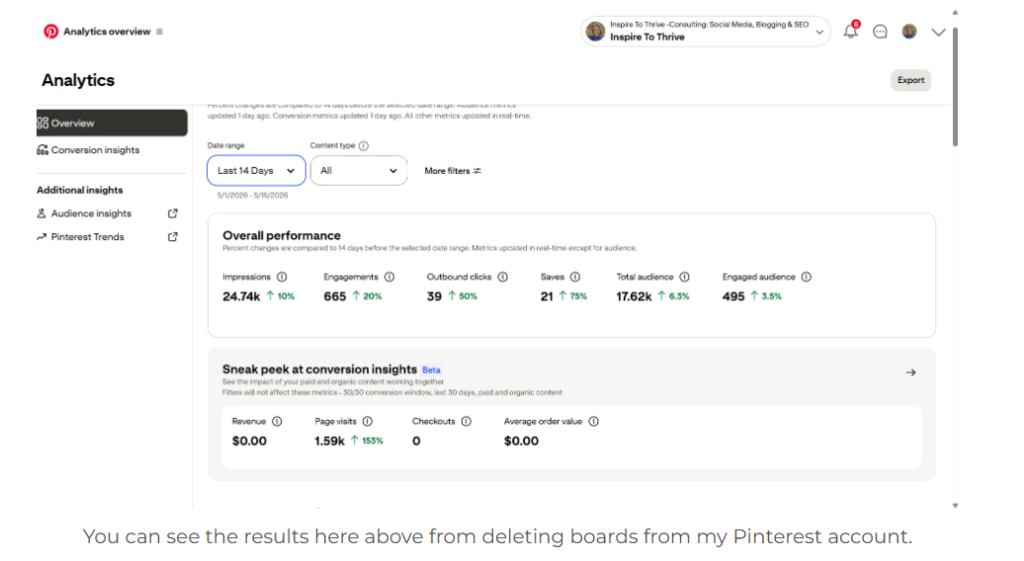
Lisa’s Pinterest ‘Spring Cleaning’ Project Results
Noticing declining stats on Pinterest, Lisa calls on one of her favorite AI tools, Grok, and decides to make some adjustments. Besides analyzing her own boards and pins, Lisa also noticed other changes while working with her boards and pins.
For example, she says there’s less copy on most image pins. She also notes that some boards are lacking descriptions, against Grok’s recommendations. The lesson? Make sure you use descriptions and tags for SEO.
Here’s the outline Lisa shared to get you started:
- Declutter for Better Performance: Removing outdated or off-topic boards helps Pinterest’s algorithm better understand your niche, potentially improving your content’s visibility.
- Archive as a Safer Alternative: If you are hesitant to permanently lose content or traffic, archiving a board hides it from public view while keeping the pins intact.
- Think Like a Search Engine: Because Pinterest functions as a visual search engine, keeping your profile focused on specific, relevant categories is essential for attracting your target audience.
- Review Before Deleting: Always check your analytics before hitting delete; even inactive-looking boards may still serve as passive traffic drivers that support your overall account goals.
Lisa stresses the importance of niching down to your core business pillar topics and deleting or archiving all unrelated boards. You want to keep this really tight and strategic.
One cool thing I didn’t know, but maybe you did, is that you can also share Instagram stories or YouTube shorts on Pinterest. I have a great idea to test out already!! We’re watching the analytics on video performance as well, but Pinterest is still very visual, including video, friendly!
Take a look at Lisa’s analytics after just two weeks since starting her ‘Spring Cleaning’ on Pinterest:
Optimize Boards for Higher Rewards
As mentioned earlier (and again, now it’s so important), working with keywords for titles, tags, and descriptions helps get your boards and pins discovered. Lisa points out the following:
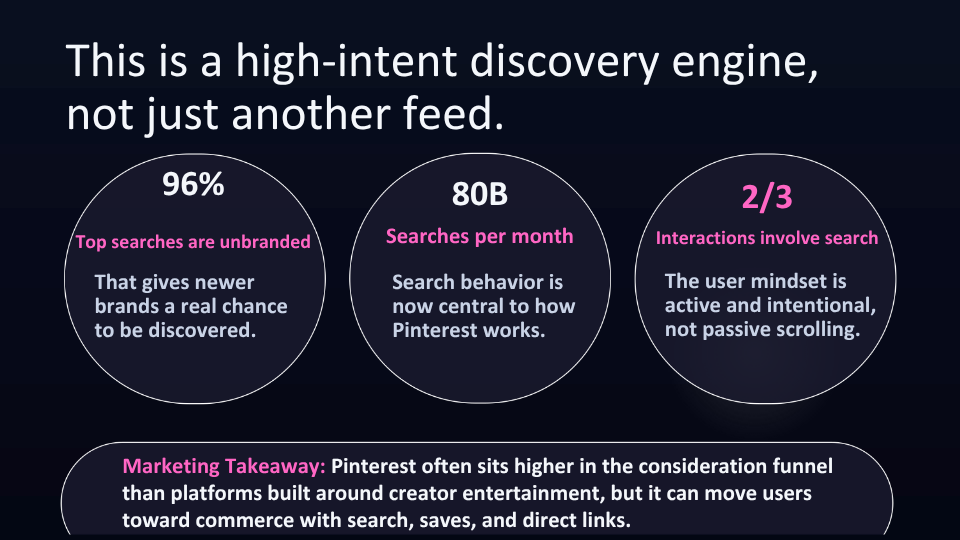
“Around 96% of Pinterest searches are unbranded, and the top reason users visit is to discover new products, giving marketers a strong chance to win attention before consumers choose a competitor.”
You don’t have to be a big or well-known brand to win business on Pinterest. Still, keyword-rich, well-described boards help search, and Lisa suggests using tools like
The Right Blogger to improve these key areas. (Lisa demonstrates this tool in the video!) Note your best-performing boards, whether old or new, and replicate for best results.
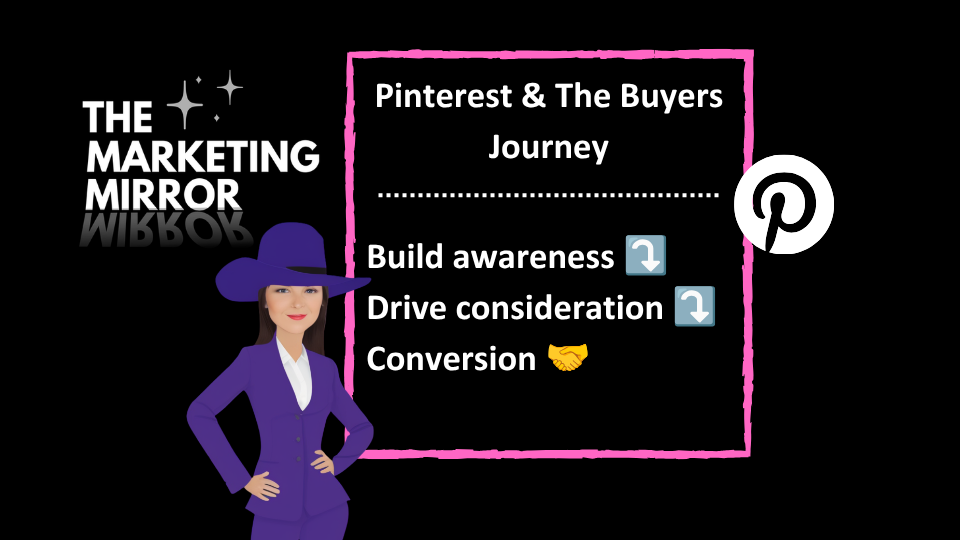
Remember that Pinterest meets people wherever they are in the buyer’s journey, and your content should reflect that, pulling viewers along on a specific journey with you. As Lisa explains, this is Pinterest’s claim to fame:
“Reach your audience where they’re making decisions. Go with them through the entire buyer’s journey.”
Easily Find Gen Z on Pinterest
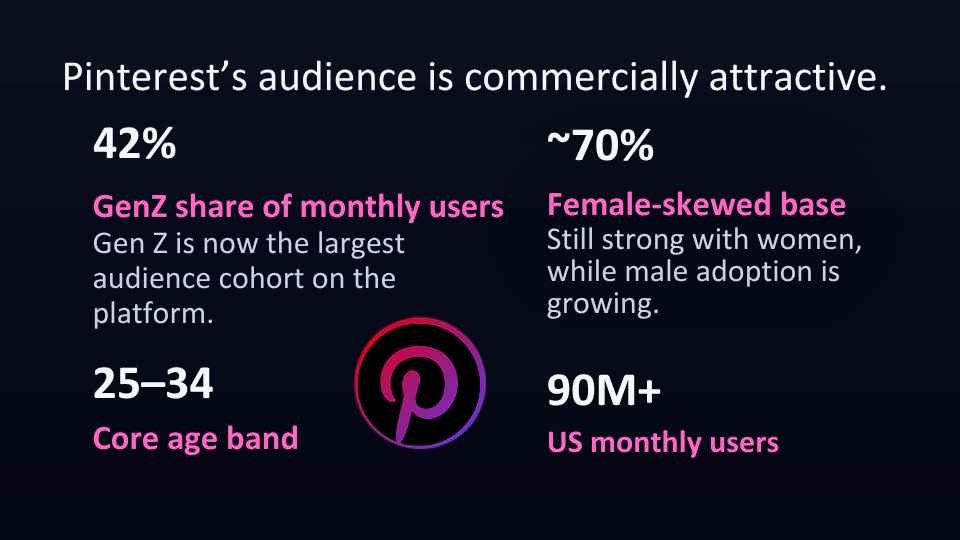
Pinterest’s business assets and user base continue to grow, but it offers a special landing place for the coveted Gen Z market. And that’s a good thing, according to Jaime Shine, as she’s been discovering more and more data supporting a Gen Z departure from social media, even smartphones. (Watch our new Adventures in Social Media LIVE playlist for more discussion on this topic.)
But Pinterest is where Gen Z goes to shop, making up a whopping 50% of the Pinterest user market. In fact, 39% of Gen Z start their searches on Pinterest rather than other search engines, and they mainly use Pinterest to find information about products or brands. (resource: Social Sprout; see link above.)
Lisa suggests using ‘trends’ from Pinterest to guide your approach to the Gen Z market for optimal reach and interest. Moving quickly on Pinterest trends can even give you a jump ahead of a trend’s momentum for a slight competitive advantage. It also helps you balance fresh content with campaign and evergreen content assets.
Besides data and stats, Lisa and Jaime share more about the Pinterest platform and how you can create a targeted, optimized experience for your brand. Here’s an outline of more of the topics we covered in our LIVE Event:
- Content format and tools for content creation
- Best performing content types and new ideas
- Pinning frequency and its effect on engagement
- Promotions and eCommerce characteristics
- Criteria for decluttering your boards
- Unique ability to link to URLs and Affiliate Links
- Evergreen and everlasting pin power
Before we continue, here’s Lisa’s astounding analytics after one month of implementing the changes we shared from her Case Study:
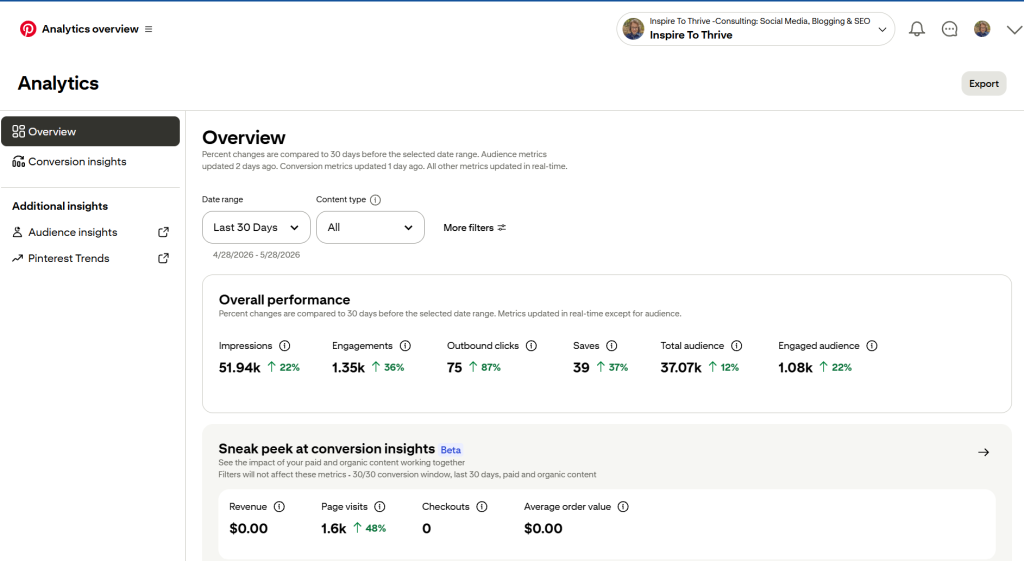
Most of the numbers more than doubled after adding only two more weeks to Lisa’s Pinterest experiment. Pretty incredible, right?
More Substance for Pinterest Success
We’re so fortunate to have Lisa and Jaime generously sharing their insights, wisdom, and experience with The Marketing Mirror. And this Pinterest discussion did not disappoint. I know I am rethinking my use of Pinterest and content strategy for Pinterest as I type this.
Lisa unveiled her Pinterest toolkit, from our longtime fav, Canva, to her present favorite, The Right Blogger, and explained how AI tools of your choice, like Grok or others, can help with optimizing posts, from design to SEO to copy, and much more.
QUUU Promote is another tool Lisa mentions as her favorite for promoting pins for others to share. Further, Lisa points out:
“Brands running Shopping ads on Pinterest see 15% higher ROAS (Return on Ad Spend) and 2.6x higher conversion rates, and 85% of weekly Pinners have made a purchase based on a brand Pin, proving the platform’s ability to turn discovery into ecommerce sales.”
And a few more notes from Lisa:
- Think of Pinterest as a ‘Creator Directory.’
- Strengthen your signals by turning on Pinterest Performance+ at the campaign level for upleveling your creative.
- Remember, ‘Trends’ on Pinterest are more durable/actionable than anywhere else.
- Take advantage of the power of the Pinterest platform for brands targeting affluent, high-intent shoppers.
- ROAS Bidding increases revenue, sales, leads, web traffic, and conversions without increasing spend.
Your Pinterest Action Plan: The Challenge
Now for the challenge! Don’t worry, we’re spelling out the plan for you, based on everything we learned from Lisa and Jaime in the LIVE conversation, combined with Pinterest best practices.
Let us know how things go for your Pinterest journey after implementing the steps!
💡Episode’s Action Plan for Viewers
A simple roadmap for you to follow…
- Audit
- List your current boards, niche, and goals; clarity is key!
- Pull the last 30–90 days of impressions, saves, and clicks for each board.
- Decide
- Tag boards as Keep / Optimize / Archive / Delete based on relevance, performance, and current goals.
- Identify off‑niche or dead boards to remove or hide; isolate underperformers.
- Optimize
- Rewrite titles, tags, and descriptions using keyword‑rich, natural language.
- Tighten each board’s topic; move or remove ALL off‑topic pins.
- Create
- Build 1–3 new boards aligned with 2026 search trends and your offers.
- Plan a steady cadence of fresh pins and repurposed content; schedule.
- Measure
- Watch analytics for 2–4 weeks after changes; tweak as appropriate.
- Track outbound clicks and saves to see whether focus improves results.
Watch the LIVE presentation:
Share your thoughts…
- Has AI Finally Killed Off SEO?

- How to Build a Recognizable Brand
- The Power of Composition in Visual Storytelling

- Pinterest Update: A Blueprint for Top-Notch Business Results
- Going LIVE to Share and Thrive
- Human/AI Collaboration: Creativity Unleashed





I feel like framing Pinerest as a search engine is the right way to go.
I neglected the platform for years because I never perceived it properly to drive consistent traffic through the channel.
Time to dive back in to clean things up over there.
I don’t think I really knew what the heck I was doing on Pinterest, Ryan… Lisa has a lot of time and experience on there, so I’m going to try to work on Pinterest and see if I can use it better, too! I think I’m starting to get on track now… Whew, there’s so much to do online! Good thing it’s still fun:)
Thank you, Sue-Ann, for having me on the show. It was fun to share the case study with your audience.
I’m sure there will be more changes coming on Pinterest, as there always are in the world of social media. Stay tuned!
I can’t thank you enough, Lisa… I think this one, even with all the good updates and new ideas, works great in conjunction with the Pinterest LIVE we did over a year ago… I was surprised when I watched it again! Thanks again and I can’t wait for the next one together! Best…